
Origin and history
The breed developed in the valley of the River Clyde in Lanarkshire, Scotland, during the 18th century, when local mares were crossed with heavier stallions for farm and haulage work. The Clydesdale Horse Society was founded in 1877.
Typical height
Commonly about 16 to 18 hands (about 163–183 cm).
Distinguishing characteristics
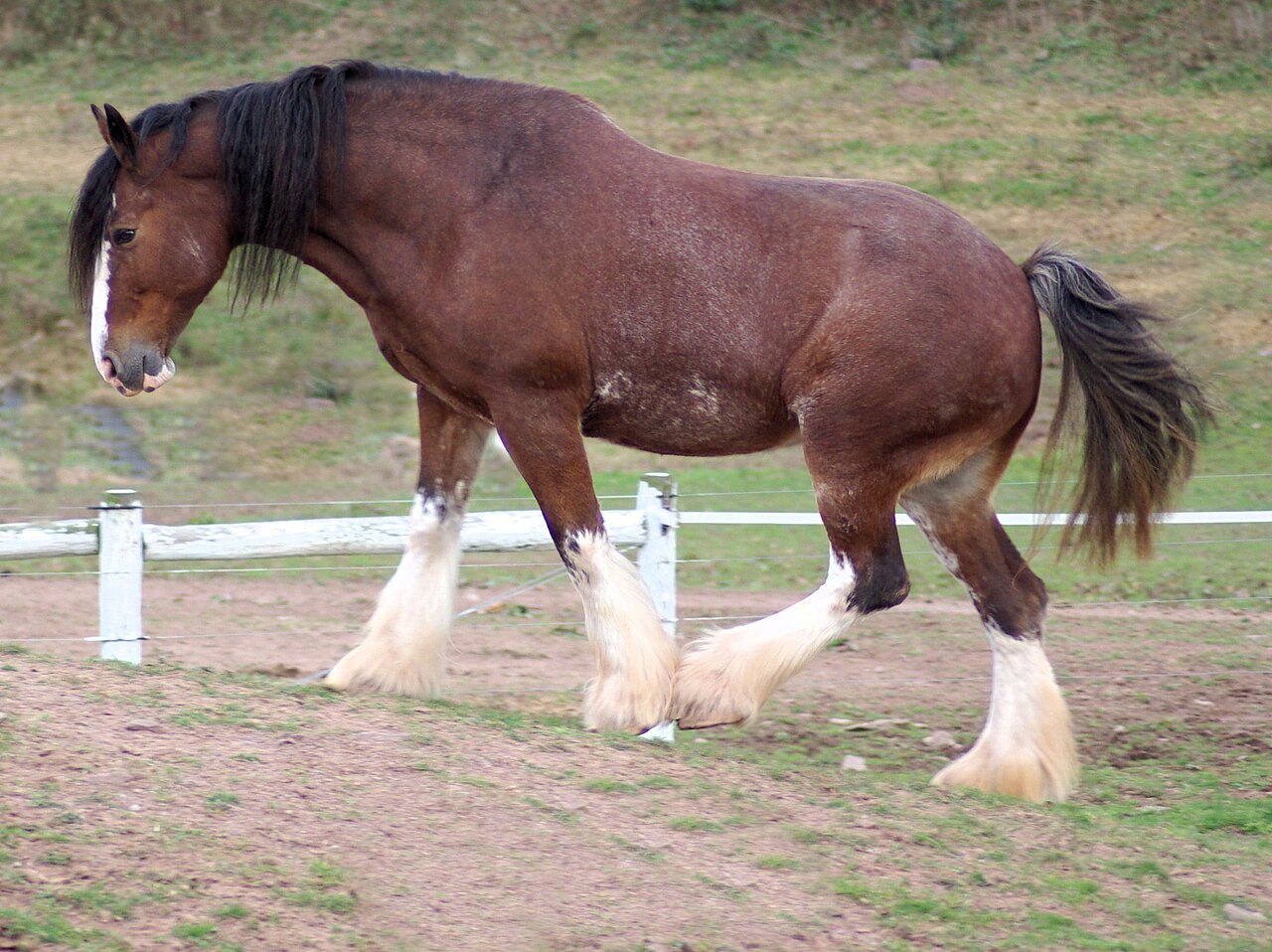
A large, well-balanced frame, a straight or slightly convex profile and long silky feathering on the lower legs.
Coat colors and patterns
Bay is most common, usually with white face markings and white legs; black, brown and roan also occur.
Common uses and disciplines
Driving, Farm work
Temperament
Typically gentle and willing — the classic “gentle giant.” Individual horses vary.
Did you know?
- Clydesdale hooves are notably large, and their shoes are correspondingly heavy.
Sources
- The Clydesdale Horse Society — Clydesdale Horse Society
- Heritage Breeds List — The Livestock Conservancy
By National Horse Co. Editorial Team · Reviewed 2026-10-03