
Origin and history
The breed takes its name from the short races, about a quarter of a mile, that colonial Americans ran on village lanes. Horses of Spanish and English descent were crossed for speed over that distance, then shaped on western ranches for cattle work. The American Quarter Horse Association was founded in 1940 in Texas to record the breed.
Typical height
Most stand roughly 14 to 16 hands (about 142–163 cm).
Distinguishing characteristics
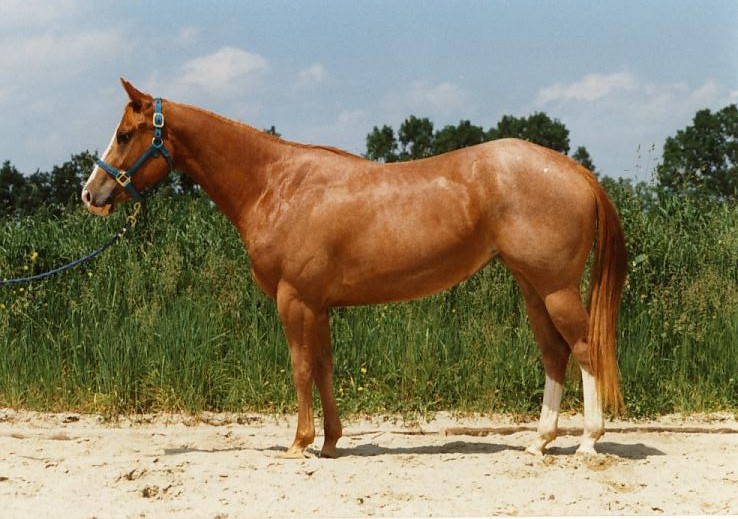
A short, broad head, powerful hindquarters, a deep chest and a well-muscled body built for acceleration and quick turns.
Coat colors and patterns
Sorrel (a reddish chestnut) is the most familiar; the registry recognizes many solid colors, including bay, black, dun, palomino, buckskin, grey and roan.
Common uses and disciplines
Western, Racing, Rodeo
Temperament
Generally regarded as calm, willing and sensible, which makes many suitable for beginners and ranch work alike. Individual horses vary.
Did you know?
- Quarter Horse racing is still run over short distances, with many races at or under a quarter mile.
- “Cow sense” — reading and anticipating cattle — is a trait breeders have long selected for.
Sources
- About the American Quarter Horse — American Quarter Horse Association
By National Horse Co. Editorial Team · Reviewed 2026-10-03