
Origin and history
Thoroughbreds were developed in England in the late 17th and 18th centuries. Every modern Thoroughbred traces to three imported foundation stallions — the Byerley Turk, the Darley Arabian and the Godolphin Arabian. Pedigrees are tracked in official stud books; in North America, The Jockey Club maintains the registry.
Typical height
Most stand about 15.2 to 17 hands (about 157–173 cm).
Distinguishing characteristics
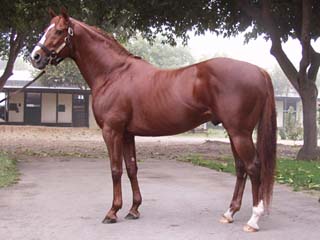
A refined head, long neck, deep chest, sloping shoulder, lean body and long legs.
Coat colors and patterns
Bay, dark bay or brown, chestnut, black and grey are most common; roan occurs less often.
Common uses and disciplines
Racing, Eventing, Show jumping
Temperament
Often energetic and sensitive; retired racehorses frequently go on to second careers with patient retraining. Individual horses vary.
Did you know?
- Thoroughbreds in the Northern Hemisphere officially age on January 1 for racing purposes.
- Many eventing and show-jumping horses carry Thoroughbred blood.
Sources
- The Jockey Club — The Jockey Club
By National Horse Co. Editorial Team · Reviewed 2026-10-03